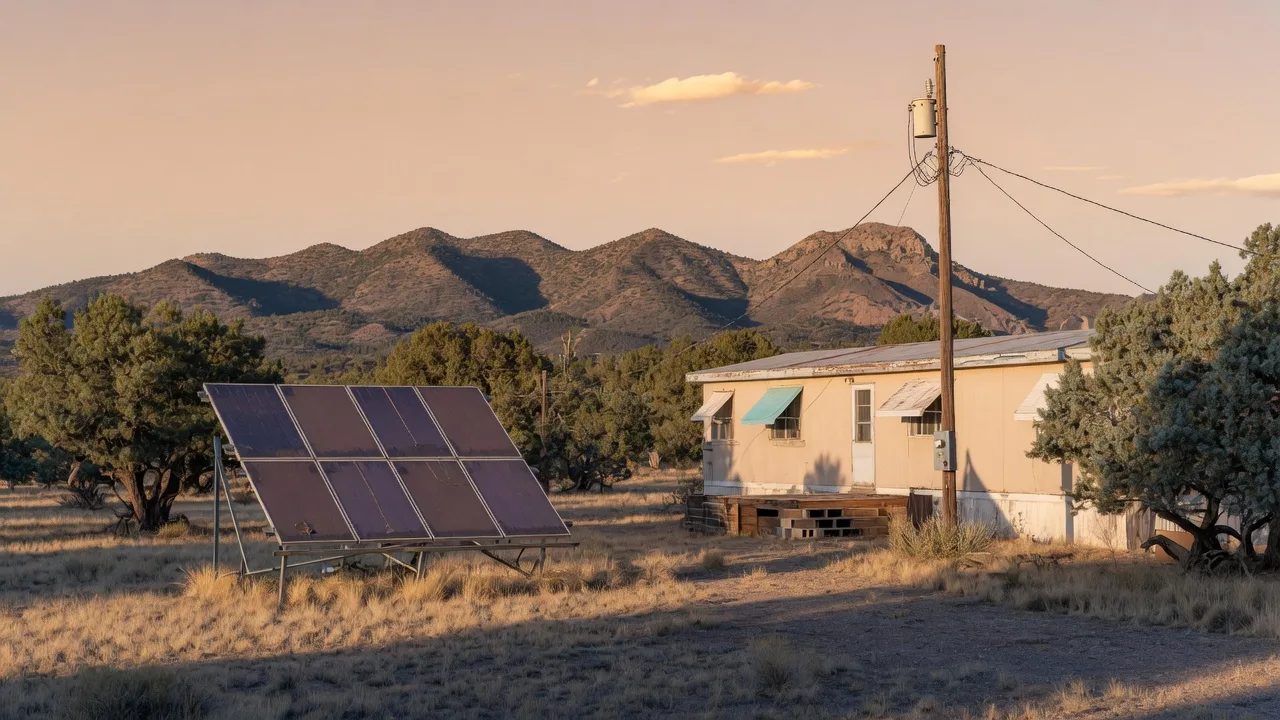
Can you get hooked up to the power grid on rural Gila County land, or do you need to go solar? The answer depends on which utility serves your parcel and how far the nearest line is. APS covers most of the populated corridor, SRP serves parts of Tonto Basin and the Highway 288 area, and Navopache Electric Cooperative handles the far eastern side of the county. If you're close to an existing line, hooking up is straightforward; if you're a mile from the nearest pole, the line extension alone can run six figures, and that's exactly when off-grid solar becomes the smarter play.
Utility and solar facts in this guide come from the APS Service Schedule 3 line extension tariff, the SRP service area map, the Navopache Electric Cooperative, the Gila County Building Safety Division, and the Arizona Corporation Commission electric service territory map.
THE SHORT ANSWER: IT DEPENDS ON THE PARCEL
The question most buyers ask me is "do I need solar?" The better question is "which utility serves this parcel, and how far is the nearest line?" Gila County is big, and there isn't one power company covering all of it. Three providers split the county, and the one that serves your parcel decides everything: whether you can hook up cheaply, whether you're facing a long line extension, or whether the property was always meant to run on its own solar.
This is the "power grid gap" I talk about when people ask why I'm based in Globe rather than Phoenix. It's not a rumor and it's not a mystery. It's a checkable, priceable detail on every rural property, and it's one of the first things I verify before I talk price.
THERE ISN'T ONE UTILITY IN GILA COUNTY, KNOW YOURS
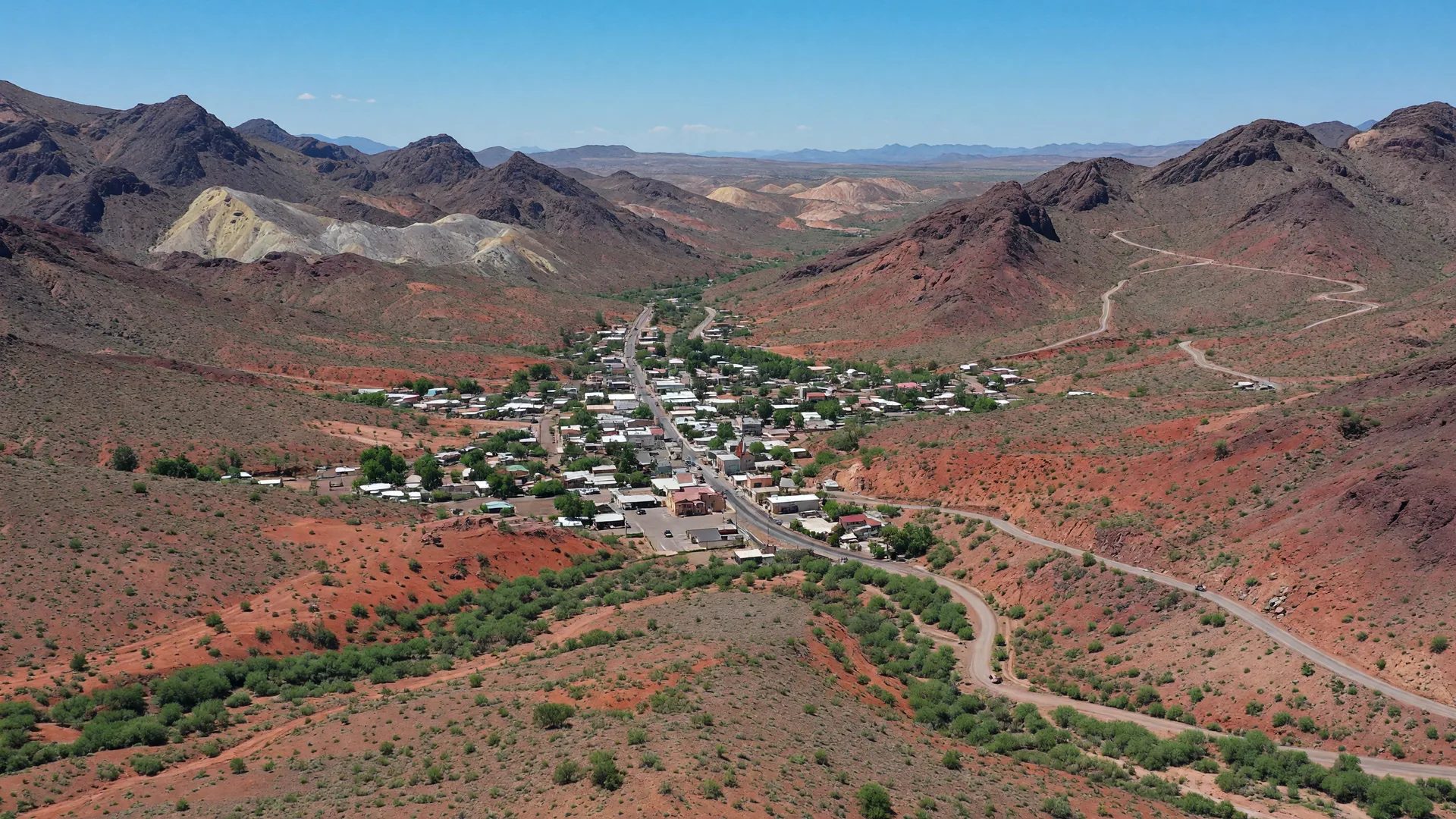
Arizona Public Service, or APS, is the largest provider in Gila County. It serves Globe, Miami, the Hayden and Winkelman area, and most of the populated Highway 60 and Highway 77 corridor. If your parcel is near town or along a main highway, APS is almost certainly your utility.
Salt River Project, or SRP, covers a smaller footprint in the county, including parts of Tonto Basin and the Highway 288 area north of Globe. My featured listing at 6368 N AZ Highway 288, for example, comes with SRP power at the meter. That's a real advantage for a property that far out, and it's one of the reasons that listing is priced the way it is.
Navopache Electric Cooperative, or NEC, is a member-owned cooperative serving the far eastern side of the county, in the Young and Heber-Overgaard direction. If you're looking at land out that way, you're not a customer, you're a member, and that comes with its own process and its own set of questions.
How do you find out which one serves a specific parcel? Three ways: run the address through the service area lookups on aps.com and srpnet.com, check the Arizona Corporation Commission's electric service territory map, or simply ask a neighbor what their power bill says. Any of those will tell you more than a listing description will.
THE REAL COST OF HOOKING UP: LINE EXTENSIONS
Here's where the power gap gets real. Under APS's ACC-approved Service Schedule 3, a single-family overhead line extension runs about $22.40 per foot, which works out to roughly $118,000 per mile. Underground runs about $8.40 per foot. And the old free 1,000-foot extension allowance is gone; the Arizona Corporation Commission reversed it around 2009, so the applicant pays the full project cost.
Do the math on that. A parcel 500 feet from the nearest pole is looking at roughly $11,000 just to reach the line. Half a mile is more like $59,000. A full mile is six figures before you've bought a single panel. SRP doesn't publish a simple per-foot rate; it quotes extensions project by project, which means the estimate matters even more before you commit.
None of this makes a property a bad buy. It makes it a property with a known cost, and a known cost is something you can negotiate around. A parcel with power at the meter is worth more than one with no line in sight, and the difference is a number you can calculate, not a guess.
"The power gap isn't a mystery. It's a number: the cost of the line extension, the cost of the solar system, or both. I price that number before I ever talk about the land."
THE SOLAR PATH: PERMITS, NOT PERMISSION
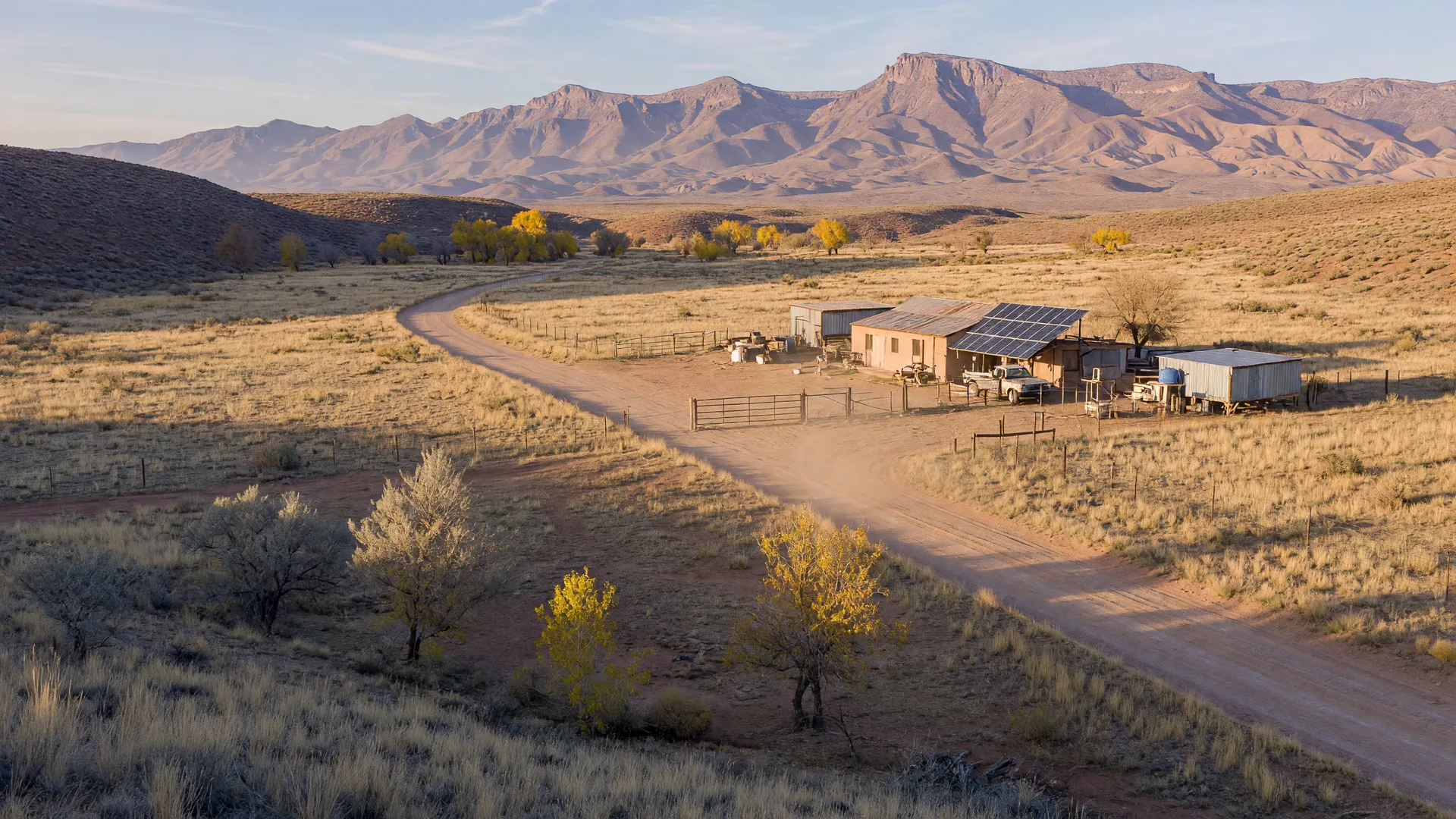
Solar is legal, common, and increasingly the default on off-grid Gila County property. What surprises people is that going off-grid does not exempt you from permitting. Gila County's Building Safety Division requires building and electrical permits for solar installations, including systems that never connect to a utility. State law, ARS 11-323, sets the standards for those solar permits, and starting January 1, 2026, HB 2301 requires counties to offer instant, automated solar permitting.
So the process is real but it's not a fight. You pull a permit, the county reviews the plan, an inspector signs off, and you're producing your own power. The bigger planning question is sizing: an off-grid system needs batteries, and usually a generator backup, and it has to be sized for how you actually live, not for a weekend cabin. That's an engineering conversation, and it's worth having before you close, not after.
NET BILLING VS. OFF-GRID: HOW ARIZONA PAYS FOR SOLAR
If you're considering a grid-tied system, understand what Arizona pays for your excess power. Full-retail net metering is gone; the Corporation Commission ended it in the Value of Solar decision in late 2016 and replaced it with net billing. Under net billing, you get an export rate for the energy you send to the grid, around 9 to 10 cents per kilowatt-hour at APS, while you still buy what you use at retail.
That changes the math. Grid-tied solar with net billing is still a solid investment, but it's not the "run the meter backward" deal it used to be. Truly off-grid systems don't interconnect at all, so net billing doesn't apply to them; you keep every kilowatt you make, and you carry the full cost of the batteries yourself. Both paths work. They're just different financial animals, and the right one depends on the parcel, the distance to the line, and your tolerance for independence.
WHAT THIS MEANS WHEN YOU'RE SHOPPING LAND
Before you make an offer on any rural parcel, get three answers: which utility serves it, how far the nearest line is, and what the extension would cost. Then decide whether hooking up or going solar makes sense for your budget. A property where power is already solved is worth more, and a property where it isn't is a negotiation, not a dealbreaker.
This is exactly the kind of detail I check on every property I represent. My current listings page shows the featured Highway 288 property with SRP power at the meter, and if you want the full cost picture on well, solar, and septic together, my guide to what off-grid living actually costs walks through the numbers.
THE BOTTOM LINE
Power in rural Gila County is checkable before you ever write an offer. Know your utility, know the distance to the line, know the tariff, and know what solar would cost instead. Do that and you take the guesswork out of the single biggest systems question on an off-grid property.
This is the work I do every week, and it's why I'm based in Globe rather than Phoenix: I know which roads have lines, which parcels have SRP at the meter, and which ones are a solar conversation waiting to happen. If you're looking at a parcel and wondering about the power story, call or text me at 480-797-1824, or send a message through the contact page. I'll check the utility, the distance, and the tariff with you so you can make an offer with your eyes open.
Written by Neil Blindauer

Realtor, DeLex Realty · A.I. Certified Agent™
With 9 years in real estate, I specialize in off-grid land, rural homesteads, and one-of-a-kind properties across Gila County, serving Globe, Miami, Winkelman and Kearny.
Learn more about Neil