Yes, you can still get homeowners insurance on rural Gila County property, but the market has tightened in a way every buyer should know about before making an offer: the county's policy non-renewal rate spiked to 2.5% in 2022, Arizona homeowners premiums rose roughly 48% between 2021 and 2024, and rural owners across the state report being pushed into the surplus-lines market at two to three times standard rates. This is the second question I ask on nearly every off-grid showing, right after water, so here is what is actually happening, what it means for buyers and sellers, and how to check insurability before you commit.
Insurance data in this guide comes from the University of Arizona Cooperative Extension's report on wildfire and homeowners insurance non-renewals in Arizona, KJZZ's reporting on insurers raising rates and dropping coverage, the Central Arizona Association of REALTORS' analysis of wildfire risk and insurance in Rim Country, the Arizona Department of Insurance and Financial Institutions' homeowners insurance data call, and AZPM's coverage of wildfire and home insurance in Arizona. This is general information, not insurance or legal advice.
THE SHORT ANSWER: COVERAGE IS AVAILABLE, BUT THE MARKET HAS TIGHTENED
Let me be direct: I have sold properties all over Gila County in the last few years, and buyers are still getting insured on rural parcels, manufactured homes on acreage, and off-grid homesteads. What changed is the effort and the cost. A standard policy from a familiar carrier is no longer a given, the way it was before the 2020s. Some owners are being non-renewed when their policy comes up, others are shopping more carriers than they ever expected, and a growing share end up with a policy from the surplus-lines market, the specialty market for risks standard carriers won't write, at premiums two to three times what they used to pay. None of that makes rural property a bad buy. It makes insurance a line item you plan for, like the well and the septic, not an afterthought.
THE NUMBERS: WHAT GILA COUNTY'S NON-RENEWAL DATA ACTUALLY SHOWS
The clearest county-level picture comes from the University of Arizona Cooperative Extension, which tracked policy non-renewal rates across Arizona. Gila County's rate ran 0.9% in 2018, 0.7% in 2019, 0.6% in 2020, and 1.0% in 2021, then spiked to 2.5% in 2022 before settling back to 1.3% in 2023, against a statewide average of roughly 0.8%. The notable detail researchers point to: Gila County's 2022 spike happened in a year with relatively little burned acreage here. The trigger was insurer anxiety about wildfire exposure across the West, not a specific fire in our backyard.
The premium side tells the same story. Arizona homeowners insurance costs rose about 20% between 2018 and 2022, according to a 2025 report to the state's Resiliency and Mitigation Council, and the Consumer Federation of America put Arizona's increase at roughly 48% between 2021 and 2024, the third-highest in the country. Up on the Rim Country side of Gila County, reporting describes long-time owners in Heber-Overgaard being dropped by carriers they had held for decades, in at least one case despite extensive Firewise mitigation, and a Payson homeowner non-renewed specifically for wildfire risk. Some rural owners report being turned down by 20 or more insurers before landing in the surplus-lines market.
WHY THIS HITS RURAL AND OFF-GRID PROPERTIES HARDEST
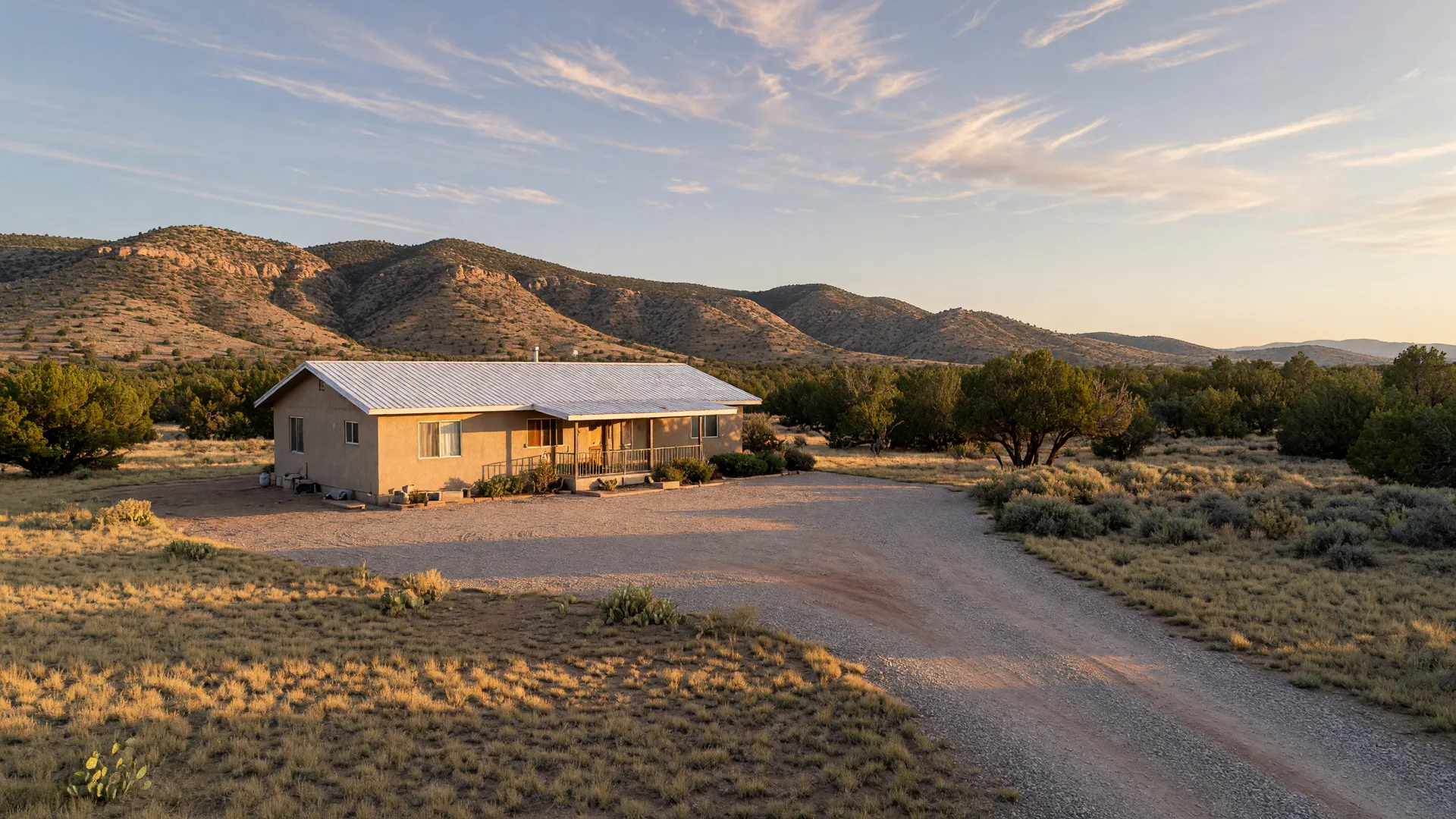
Insurance is a risk-pricing exercise, and rural properties carry a different risk profile than a subdivision home. Wildfire exposure is the headline, but it is not the only factor: distance from a fire station, narrow or long driveways, limited hydrant access, reliance on a private well for firefighting water, older structures, and manufactured homes all shape what a carrier will quote. The Globe area's exposure is real but different from the Rim's pine forest: grassland and juniper fuels with wind-driven grass fires, plus the same access questions that apply anywhere off the paved grid. And many of the properties I sell are manufactured homes on acreage, which are insured under a separate manufactured-home policy rather than a standard homeowners form, a category carriers have been tightening along with everything else.
The practical effect is that insurance has quietly become part of the due-diligence list on rural property, right next to water access and zoning. A parcel can check every box you care about, have a great well, the right zoning, the space you want, and still carry a monthly insurance cost that surprises you if you never priced it. My guide to what off-grid living actually costs covers the big systems, and insurance belongs in that same budget conversation, alongside the well, the solar, and the septic.
"When I show a parcel, I ask about insurance in the same breath as water and zoning. Not because it should stop you, but because it should never surprise you. The buyers who get burned are the ones who learn about the policy after they own the property, not before."
WHAT BUYERS SHOULD CHECK BEFORE THEY MAKE AN OFFER
Get a quote before you write an offer, not after. A local independent agent who writes rural and manufactured-home policies will tell you in one phone call whether a parcel is insurable and roughly what it costs. Bring them the address or parcel number and, if there is a home, the year it was built, the square footage, and the roof type. If the property has an existing policy, ask the seller for the current declaration page and the claims and loss history. A clean record and a current policy are strong signals. An owner who was non-renewed is a fact you want to know before you are emotionally invested.
For vacant land, insurance is simpler and cheaper: raw land is usually covered by a basic liability policy that costs a fraction of a homeowners premium, and the real insurance question arrives when you build. So the timing works in your favor if you are buying acreage to build later: you can confirm the long-term picture by asking the agent what a completed home on that parcel would likely quote for, based on the same access and exposure factors, before you commit to the land. That is the same kind of forward thinking I walk buyers through on zoning and water in my guide to what is legal on unincorporated Gila County land.
WHAT ACTUALLY HELPS WITH WILDFIRE RISK
Mitigation genuinely matters, and it is the one part of this you control. The basics that come up on every rural quote: cleared defensible space around structures, a driveway wide and long enough for fire apparatus to reach the home, an address that is clearly visible from the road, and a water supply a fire crew could use. On the Globe side of the county, keeping grass and juniper back from the structure and maintaining access roads does real work. The state's Firewise program offers a structured way to approach this, and several communities in Gila County participate.
I will be honest about the limits, though, because you deserve the truth before you spend money on the wrong thing. Mitigation reduces risk, and carriers weigh it, but it is not a guarantee of renewal or a rate. The Heber-Overgaard homeowners who were dropped despite Firewise work are proof that insurers are making portfolio decisions that individual mitigation cannot always override. So do the mitigation because it protects your home and your family, and treat it as one factor in your insurance strategy, not the whole strategy.
WHAT THE STATE IS DOING ABOUT IT
Arizona has started treating this as the policy problem it is. The 2025 legislature created a Fire Insurance Review Task Force to study non-renewals and rate pressures, and the Arizona Department of Insurance and Financial Institutions issued its first-ever mandatory data call under state law, requiring insurers to submit 2025 transaction-level policy data for designated high-risk wildfire zones by April 1, 2026. Until now the state did not systematically track where and why coverage was being dropped, which made it hard to prove the scope of the problem. That is changing, and the data now coming in should give lawmakers a much clearer picture for whatever comes next. It is also a reason to keep any policy you do have current and to document your mitigation work, because a history of defensible-space maintenance is the kind of record that helps when the market tightens further.
WHAT THIS MEANS FOR SELLERS
If you are selling, insurability is now part of marketability. A rural property that a buyer can actually get a policy on, at a defensible price, is a property that closes. A property that carries an insurance story, a lapse, a non-renewal, or a quote that shocks every buyer who checks, gets discounted, or worse, gets passed over entirely. I tell sellers to pull their current declaration page before we list, have the loss history ready, and clean up the obvious mitigation items: brush near the structure, a clear address marker, maintained access. These are cheap fixes that remove friction from the sale, and they matter more every year. If your property has been sitting, insurance may be part of the reason, which is one of the patterns I cover in my guide to why rural properties fail to sell.
THE BOTTOM LINE
Coverage on rural Gila County property is still available in 2026, but the market has tightened: non-renewals spiked in 2022, premiums have climbed sharply, and some rural owners are paying two to three times standard rates through surplus-lines carriers. Buyers should price insurance before they offer, ask for the seller's current policy and loss history, and understand the access and exposure factors that shape a quote. Mitigation helps, and the state is finally tracking the problem with a real data call and a task force, but none of it removes insurance from your due-diligence list. Plan for it like you plan for water, and rural property still works exactly as well as it always has.
When I show a parcel, insurance is part of the conversation before it is part of the budget, and I will tell you straight what a property is likely to cost to protect before you get attached. You can see how I present the kind of properties I sell on my current listings page, my About page explains why I work this market from Globe rather than Phoenix, and the contact page is the easiest way to reach me. Call or text me at 480-797-1824, and let's start with what you actually want to do with the land, not a sales pitch.

Written by Neil Blindauer

Realtor, DeLex Realty · A.I. Certified Agent™
With 9 years in real estate, I specialize in off-grid land, rural homesteads, and one-of-a-kind properties across Gila County, serving Globe, Miami, Winkelman and Kearny.
Learn more about Neil