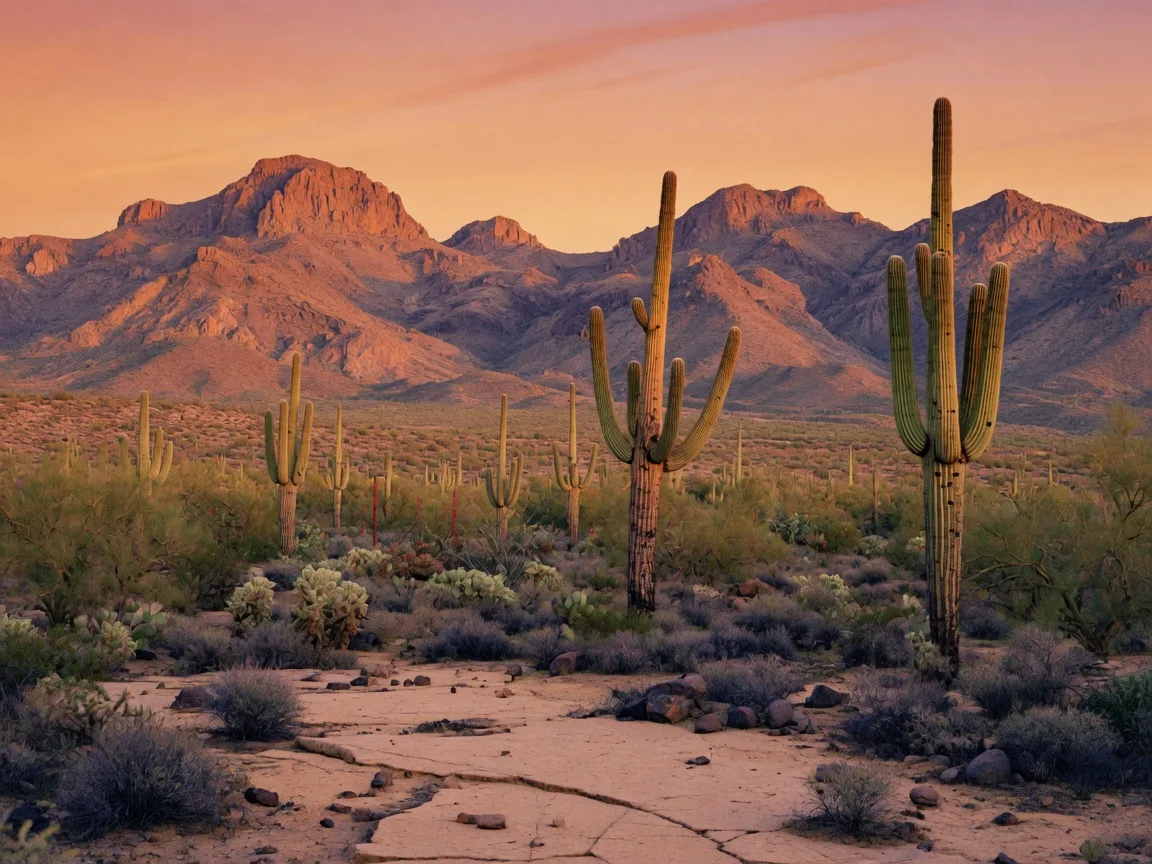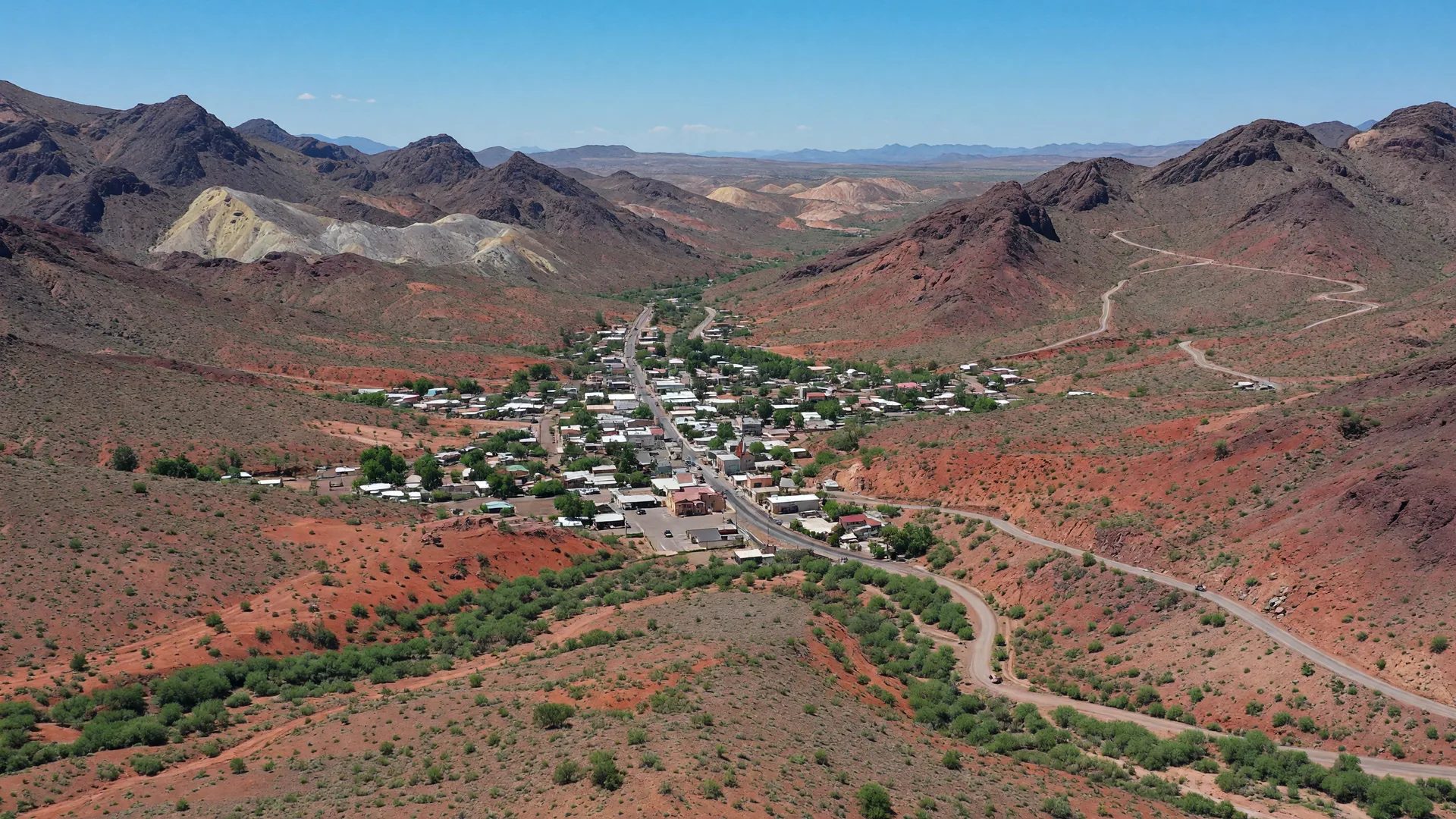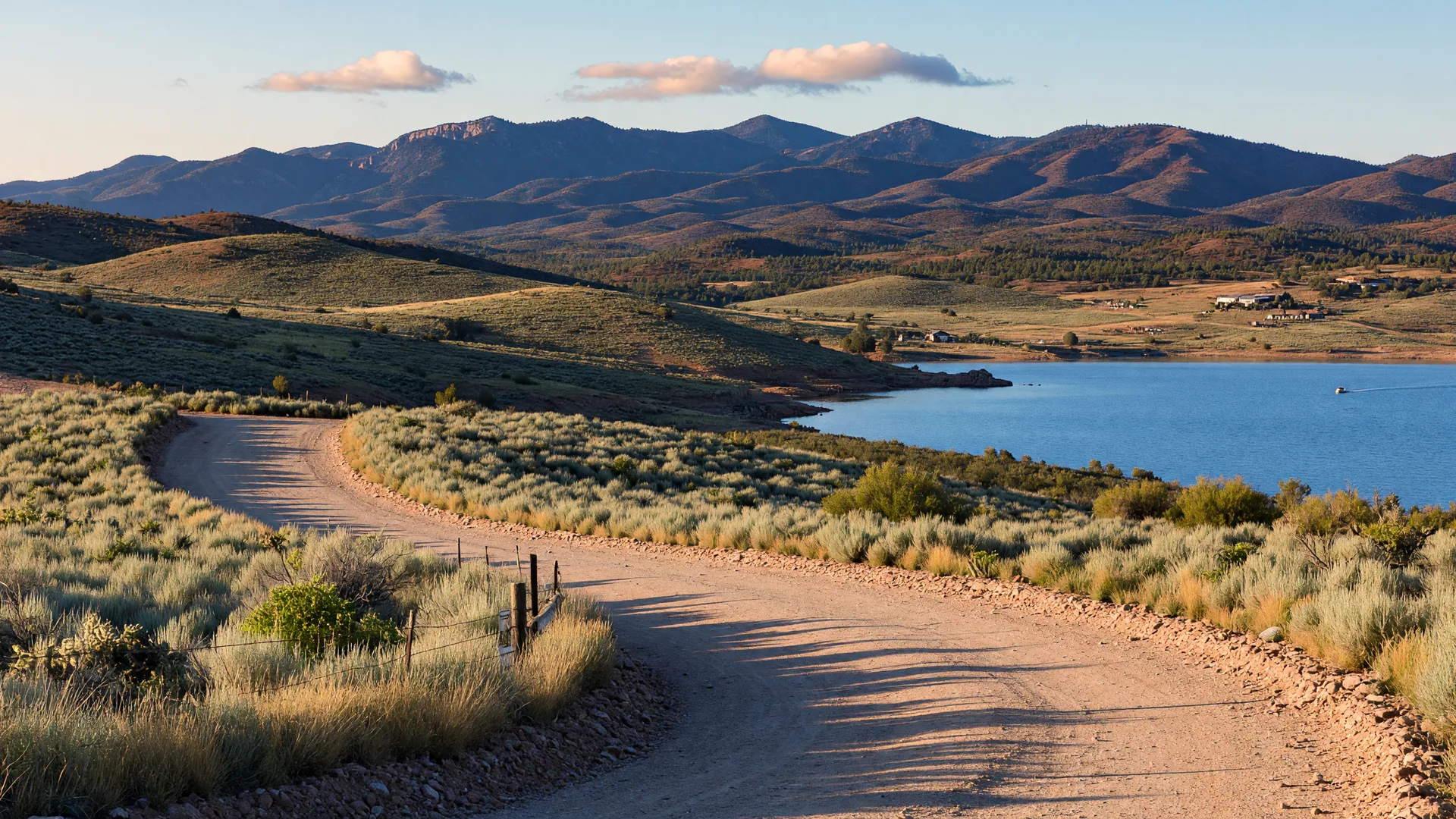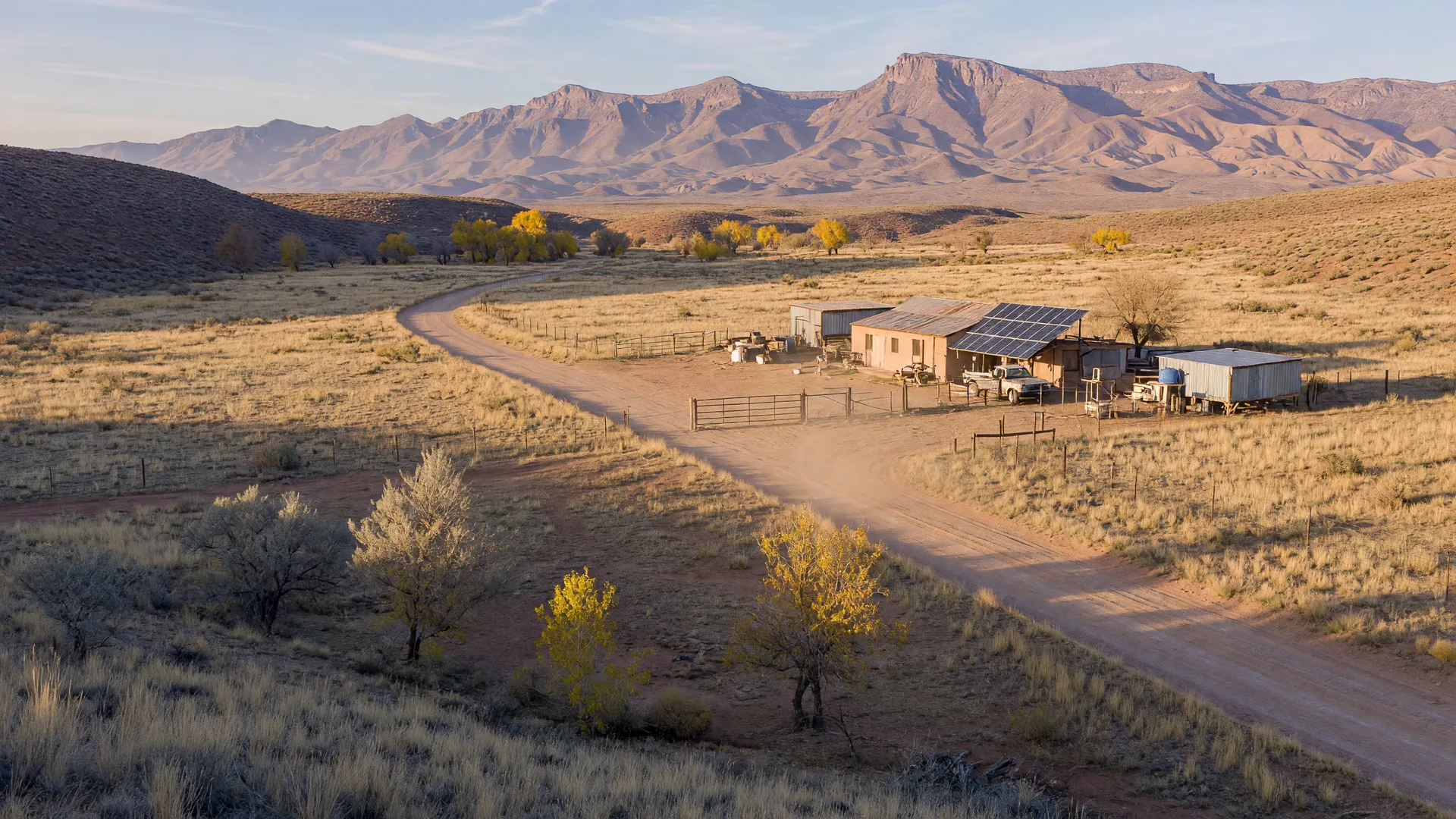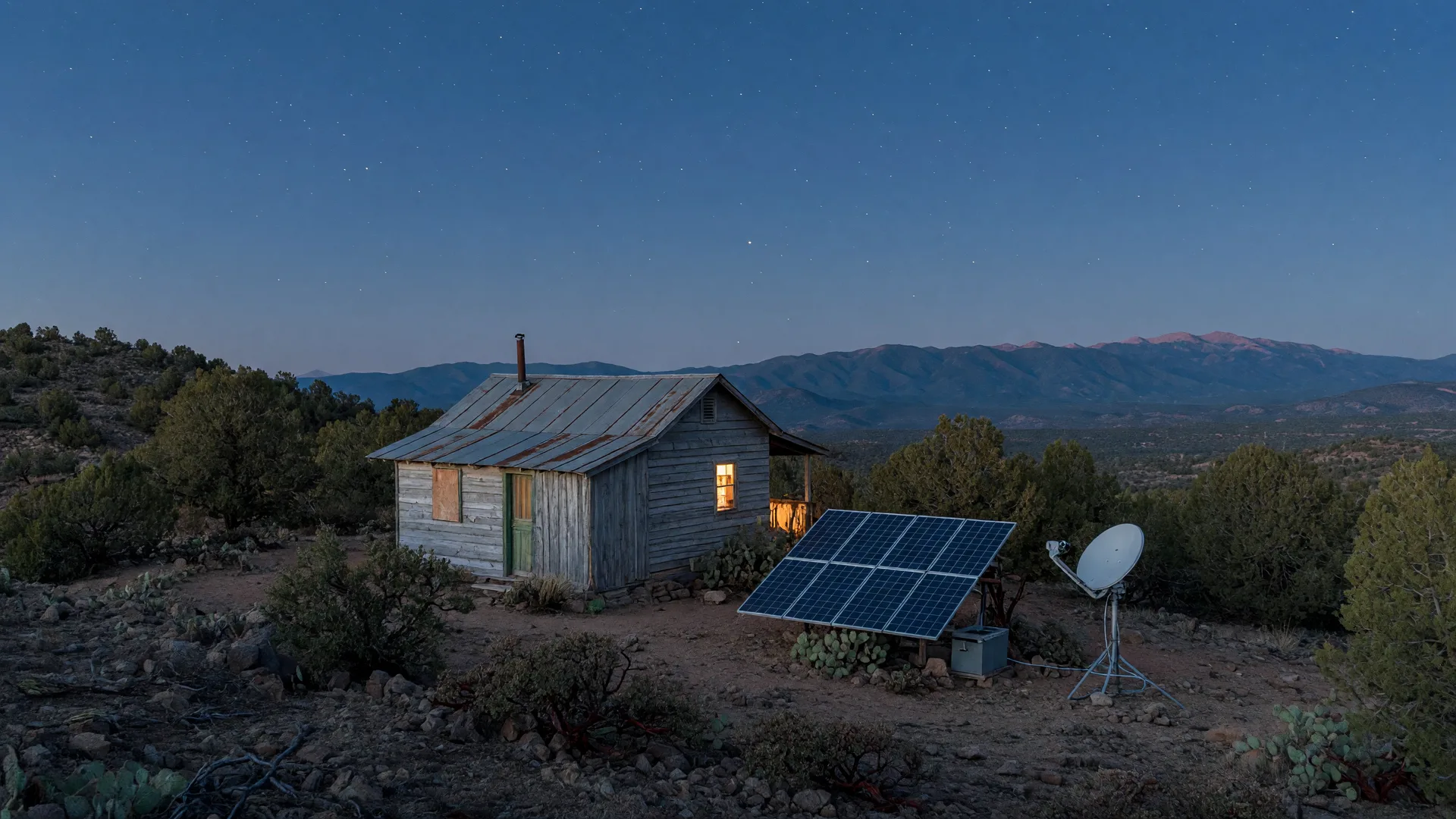
What's the internet and cell service actually like on rural Gila County land? The honest answer is that it depends entirely on which parcel and where it sits. In town, you can usually get wired internet and usable cell coverage. Out on acreage down the Highway 77 corridor or around Tonto Basin, you need a plan, and that plan is almost always satellite internet plus knowing which carrier actually holds signal on your specific road. Here's what I tell every buyer who asks, because it's one of the first questions that separates a property that works for remote work from one that doesn't.
Connectivity facts in this guide come from CoverageMap's Gila County cell coverage data, BroadbandNow's Globe provider list, BroadbandNow's Tonto Basin provider list, the Gila County broadband office, and Starlink's residential plans.
THE SHORT ANSWER: IT DEPENDS WHERE THE PARCEL SITS
Gila County is one of Arizona's largest counties by land area and one of its thinnest by population, which means coverage is built along the towns and the main corridors, not across the whole map. Crowd-sourced coverage maps put usable 4G LTE on roughly half the county's land area and 5G on maybe a sixth of it, and almost all of that sits along the population centers. That same data suggests about 78% of the county's land has some kind of wireless signal, which reaches close to every resident who lives in town, while backcountry parcels down the Highway 77 corridor and around Tonto Basin can have very little or nothing at all. In short: town properties are easy, remote parcels take homework.
CELL SERVICE: AT&T TESTS BEST, BUT TEST YOUR SPECIFIC ROAD
Across the county as a whole, AT&T consistently tests as the most dependable carrier on the crowd-sourced maps, with Verizon and T-Mobile close behind in and around Globe itself. If you're buying in-town property in Globe or Miami, any of the three majors will give you usable, everyday service. The problems start once you leave the pavement.
The Highway 77 corridor south of Globe, heading toward Winkelman and Hayden, is the classic example: there are long stretches of the Globe-to-Tucson route where drivers report essentially zero signal, and a parcel even a few miles off that road can sit in a dead zone. Tonto Basin is similar, with spotty native coverage from all three carriers and big gaps, especially inside buildings. The maps give you a starting picture, but they're estimates, not guarantees. That's why the real test happens on the ground: drive the access road, stand where the house or camper would go, and check your own phone on all three carriers before you commit to anything.
"The coverage map doesn't know what it's like at the end of your specific access road. Your own phone, tested on the actual parcel, does."
WIRED INTERNET ONLY GOES SO FAR
If wired internet matters to you, this is where the two markets diverge sharply. Globe is comparatively well served: CenturyLink offers fiber and DSL with download speeds up to around a gigabit on a large share of the town, and Sparklight provides cable internet at similar speeds across most of it. A property in Globe can genuinely run a home office on a wired connection.
Tonto Basin and the rural corridors are a different story. Tonto Basin has effectively no cable service and DSL reaching under half of homes. The practical wired and fixed-wireless options there are local fixed-wireless ISPs where line-of-sight allows, like Tristate Wi-Fi and XNET WiFi, plus the cellular home internet products from Verizon and T-Mobile in the pockets where signal exists. Fiber buildouts are happening across the county, but they reach specific served households, not scattered remote parcels, so don't count on a fiber line at the end of a dirt road any time soon.
SATELLITE IS THE OFF-GRID STANDARD
For off-grid and acreage properties, satellite is the reliable answer, and Starlink is the option most of my buyers land on. It's available statewide in Arizona, and because it's satellite-based, its availability doesn't depend on how close you are to a town or a cell tower. On a standard residential plan you can expect download speeds in the 50 to 220 megabit range and enough stability for video calls, which is why so many remote workers live happily on rural acreage.
The 2026 pricing picture is straightforward: Starlink's residential plans run about $55 a month for the 100 megabit tier, $85 a month for 200 megabits, and up to around $130 a month for the faster Residential Max plan, plus a one-time hardware kit that runs roughly $350. Budget around $55 to $130 a month plus the kit, and you have a workable number for any property you're evaluating. The older geostationary satellite options, Viasat and HughesNet, are still there as fallbacks, but they're slower with higher latency, so they're a backup, not a plan.
THE COUNTY IS ACTUALLY WORKING ON THIS
It's worth knowing that Gila County has been actively chasing better broadband for years. The county adopted a Broadband Master Plan in 2019, won a $50,000 rural broadband development grant from the state in 2020, and in 2024 and 2025 pushed residents to document unserved locations through Arizona's federal BEAD challenge process so the buildout maps reflect what's really out there. That work is real, and it will improve connectivity over time. But for someone buying today, the smart move is to treat today's options as your baseline and any future fiber as a bonus, not a promise.
HOW TO CHECK A SPECIFIC PARCEL
Before you make an offer on acreage, run the property through a five-step check:
- 1 Check Starlink at the exact address. Enter it on Starlink's availability map to confirm service and see which plan applies.
- 2 Pull the carrier coverage maps. Check AT&T, Verizon, and T-Mobile at the parcel, and remember the maps are estimates.
- 3 Drive the road and test your phone. The dead zone is usually on the last mile, not the highway.
- 4 Ask the seller what they actually use. A current owner's real-world setup beats any map.
- 5 Talk to the neighbors. The folks already living off the same grid have the honest answer about booster, dish, and carrier.
This is exactly the kind of due diligence that doesn't show up in a listing photo, and it's the same reason I verify the water, power, and zoning story on every property I represent, which I walk through in my power and solar guide and my water access guide. Connectivity is just one more number in that equation, and it's one you can check before you ever write an offer.
WHY THIS MATTERS FOR YOUR OFFER
For remote workers, connectivity isn't a nice-to-have, it's the whole reason the move is possible in the first place. A parcel with a documented Starlink setup or a cell booster already in place is worth more and sells faster than a question mark on a dirt road, and I price and present properties that way. When you're comparing a few acres off the same corridor, the one with a proven connectivity story is the one that carries its value, not just its view. I cover the broader picture of what off-grid life really takes in my Off-Grid Living 101 guide, and what it's like to actually live out here in my Living in Globe guide.
THE BOTTOM LINE
You can absolutely work remotely and stay connected on rural Gila County land, but you plan for it instead of assuming it. In town, wired internet and solid cell coverage are realistic. Out on acreage, satellite internet plus the right carrier is the standard, and it's a manageable cost you can verify at the exact parcel before you buy.
I drive these roads and check these parcels for a living, and I'll do the connectivity homework with you, not just hand you the MLS sheet. If you're looking at a parcel and wondering whether you can actually work from there, call or text me at 480-797-1824, or send a message through the contact page. You can see what I'm currently marketing on my listings page, and read more about how I work on my about page.
Written by Neil Blindauer

Realtor, DeLex Realty · A.I. Certified Agent™
With 9 years in real estate, I specialize in off-grid land, rural homesteads, and one-of-a-kind properties across Gila County, serving Globe, Miami, Winkelman and Kearny.
Learn more about Neil