Yes, nearly every buildable off-grid parcel in Gila County can support a permitted, conventional septic system, but there is a one-acre lot rule and a mandatory soil test that decide it, not the asking price. Here is the short version: Gila County issues the septic permit on behalf of the Arizona Department of Environmental Quality, a conventional system (a tank plus an underground drain field) needs a lot of at least one acre in most unincorporated areas and ground that actually percs, and the whole process starts with a soil characterization test run by a county-authorized contractor. This is one of the first questions I get on almost every rural showing, right behind water and power, so here is exactly how septic works out here in 2026 and what to verify before you write an offer.
Wastewater permitting information in this guide comes from the Arizona Department of Environmental Quality's on-site wastewater page, the Gila County Community Development Wastewater department, the Gila County wastewater FAQs, and current summaries of Arizona septic tank requirements. This is general information for buyers and sellers, not legal or engineering advice, and requirements can change. Confirm the specifics for your parcel with the county before you commit.
THE SHORT ANSWER: YES, IF THE LOT AND THE SOIL COOPERATE
Off-grid land in Gila County is not on a municipal sewer system, so a private septic system is how the water that goes down your drains leaves your property and returns to the ground safely. And the good news is that conventional, permitted systems are routine on rural parcels here. The two things that actually gate the process are lot size and soil quality. In most unincorporated areas Arizona requires a minimum lot of one acre, 43,560 square feet, for a conventional septic, and the soil in the proposed drain field area has to be proven suitable before the county will bless the design. If either of those fails, you move into engineered systems, which is where the costs climb. So the practical question a buyer should ask is not "can I have a septic," it is "does this particular parcel pass the soil test at a price that still makes sense."
WHO PERMITS SEPTIC IN GILA COUNTY: THE COUNTY, ON THE STATE'S BEHALF
A lot of buyers assume septic is a state permit or a county inspection with no paperwork. It is actually a combined deal. The Arizona Department of Environmental Quality, ADEQ, writes the on-site wastewater rules under Arizona Administrative Code, and it has delegated the day-to-day permitting and inspection of conventional residential systems to each Arizona county. In Gila County that means you apply to the Gila County Community Development Wastewater department, which issues the septic permit on ADEQ's behalf and performs the related soils testing and inspections. You only go back to ADEQ directly, usually through an Aquifer Protection Permit, on the rare cases that involve a discharging, large, or alternative system. For the standard off-grid home, your county permit is the one that matters, and it is an honest, achievable step, not a mountain of red tape.
THE ONE-ACRE RULE: LOT SIZE IS THE FIRST FILTER
The first number to know is one acre. In most unincorporated areas of Arizona, a conventional septic tank and its underground soil-absorption drain field require a minimum lot size of 43,560 square feet. Nearly all of the off-grid acreage I sell in Gila County is well past that, which is one reason these parcels are so workable. But the size of the lot matters for placement, not just existence: the drain field needs enough open ground, set back from property lines, structures, and any well, to meet the county's separation requirements. So when I look at a parcel, part of my job is eyeballing whether there is room for a house, a well, and a drain field that do not crowd each other. If you are wondering how much land that really takes, my guide to how much land you need for a homestead, hobby ranch, or corrals goes through the honest ranges.
THE FIRST STEP IS THE SOIL TEST, SO DO IT BEFORE YOU BUY
The single most important piece of septic due diligence is the soil test, and it happens early. Gila County requires a soil characterization and percolation test in the area where the drain field would go, performed by a private contractor from the county's authorized list of soil evaluators. You schedule that test through the county Wastewater department, the contractor runs it, and the county reviews both the feasibility and the proposed location before signing off on a design. A passing percolation test tells you the ground will absorb the effluent the way a drain field needs it to, which is the whole ballgame for a conventional system.
"I have watched buyers fall in love with a cheap parcel and then discover the soil will not percolate, which turns a straightforward build into an engineered system that costs real money. The soil test answers that question for a small fee long before you are emotionally or contractually committed. It is always the order I put it in."
WHAT A PERMITTED CONVENTIONAL SYSTEM ACTUALLY IS
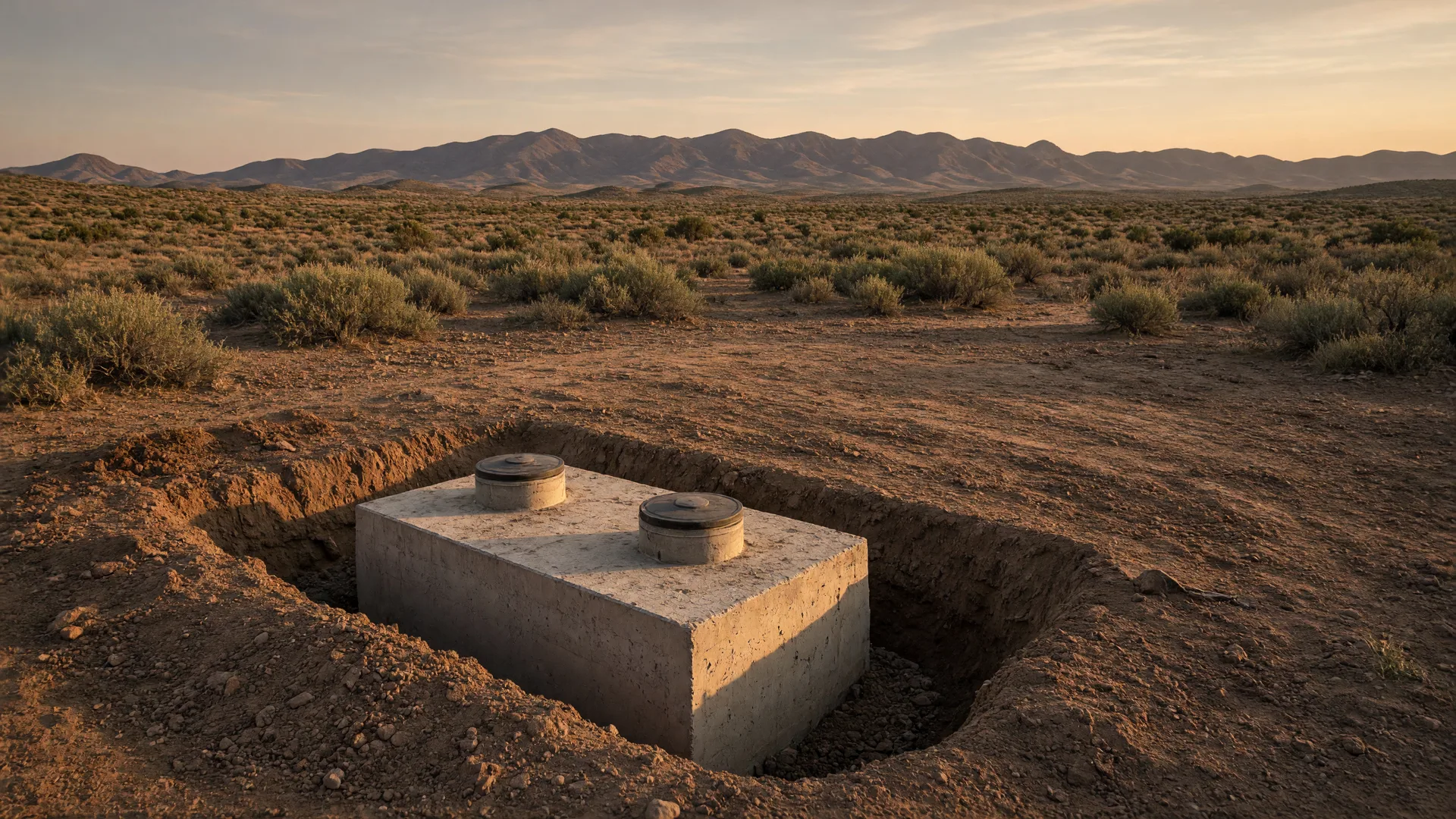
The word "septic" covers a lot of ground, but a conventional rural system that discharges below ground is made up of two parts: a buried tank and an underground soil-absorption field, sometimes called the leach field or drain field. Arizona rules require the tank to be watertight, durable, at least two compartments, and sized to the household flow. Wastewater runs from the house into the tank, the solids settle, and the liquid moves out into the drain field where the soil treats it. That is the whole system. A properly permitted, well-placed conventional septic is quiet, runs on gravity or a simple pump where elevation demands it, and once it is in, it is mostly maintenance-free for years at a stretch.
WHEN YOU ARE PUSHED INTO ALTERNATIVE OR ENGINEERED SYSTEMS
Here is the honest cost warning. If the lot is smaller than one acre, or if the soil in the proposed drain field will not support a conventional absorption field, the fix is an alternative or engineered system, and those are where the budget goes sideways. Gila County's own guidance notes that alternative systems can run above $30,000, which is more than several times the cost of a straightforward conventional install. That is exactly why I have soil tested flagged so prominently in my buyer checklist. For a seller, it is worth knowing that a parcel that already has a documented, permitted septic that percolates is worth more and sells more smoothly than one where the buyer has to gamble on the soil. For a buyer, the message is that cheap land can carry a hidden six-figure-improvement story, and the soil test is the cheapest insurance you will buy on the whole property.
SEPTIC AND WELL GO TOGETHER: KNOW THE SETBACKS
On most off-grid parcels you are installing a private well and a private septic on the same property, which means the two systems have to respect separation distances. The county's design review confirms the well and the drain field are placed far enough apart, with the drain field set back from the well, from structures, and from property lines, to protect the groundwater you drink. If you are buying an existing property, the county record and the original permit will tell you where the septic sits and whether it is permitted. My guide to drilling a well in Gila County covers the water side of that pair, and my guide to verifying water access before you offer covers the due diligence you should do on both before you commit.
WHAT TO CHECK ON AN EXISTING PROPERTY
If the parcel already has a dwelling, the septic story is usually already written, and the task is verification, not installation. Pull the wastewater record through Gila County and confirm the system was permitted and passes inspection. Ask whether the system is conventional or engineered, where the tank and field sit on the parcel, and whether there is any history of failure or pumping problems. Then factor the age and condition of the tank into your negotiation. A clean, documented septic record is a genuine asset on rural property, and it is something I highlight on my current listings whenever a parcel has it.
THE BOTTOM LINE
A conventional septic is achievable on nearly every buildable off-grid parcel in Gila County, provided the lot is at least one acre and the soil passes the county's test. The county permits it on the state's behalf, the process starts with a soil characterization run by an authorized contractor, and the standard setup is a two-part underground system that treats wastewater right on your land. The cost risk lives in the alternative and engineered systems that take over when the soil or the lot size will not cooperate, which is why the soil test should happen before you are in contract, not after. For a full picture of how much the whole off-grid setup costs, my guide to what off-grid living actually costs ties well, solar, and septic together into one realistic budget.
When we talk, I will pull whatever is on file for a parcel, tell you whether the county has a drain field feasibility on record, and help you figure out if the septic story aligns with your budget before you spend money on an offer. You can see the kind of acreage I work with on my current listings page, my About page explains why I operate from Globe rather than Phoenix, and the contact page is the easiest way to reach me. Call or text me at 480-797-1824, and let's start with what you actually want to do with the land, not a sales pitch.

Written by Neil Blindauer

Realtor, DeLex Realty · A.I. Certified Agent™
With 9 years in real estate, I specialize in off-grid land, rural homesteads, and one-of-a-kind properties across Gila County, serving Globe, Miami, Winkelman and Kearny.
Learn more about Neil