Yes, you can build a shop, a guest house, and in some cases a second home on most rural Gila County parcels, but the county treats each one very differently, and knowing the difference is what keeps your plans legal: a non-habitable shed under 200 square feet needs no building permit, a detached shop or barn above that size needs a building permit and site plan review, a guest house is capped at 800 square feet and two habitable rooms, and one accessory dwelling unit is allowed on single-family rural lots once the main home exists. This is the first question buyers ask me after they fall for a parcel, right up there with water and zoning, so here is the actual rulebook for unincorporated Gila County, what each structure really allows, and what to check before you make an offer.
Structure rules in this guide come from the Gila County Zoning Ordinance for Unincorporated Areas (revised March 15, 2022), Gila County Ordinance No. 2015-04, which permits accessory dwelling units, the Gila County Residential Building Code Handbook, and the Gila County Building Safety FAQs. Exact lot-size and setback requirements vary by zoning district and parcel, so confirm the details for the specific piece of land with the county before building. This is general information, not legal advice.
THE SHORT ANSWER: ALL THREE ARE POSSIBLE, BUT THE RULES AREN'T THE SAME
Most unincorporated rural parcels in Gila County sit in the GR (General Rural) zoning district, which is a single-family residential district. That is good news for buyers with big plans: GR land is designed for a house plus the supporting buildings a rural life actually needs. The question is never simply whether you can add structures, it is how the county classifies each one, because the classification sets the size limits, the permit path, and what you are allowed to use the building for. A shed, a shop, a guest house, and an accessory dwelling unit are four different animals under the Gila County Zoning Ordinance, and mixing them up is where buyers get themselves into trouble after closing. My guide to Gila County zoning classifications explains what GR, CB-1, and agricultural designations mean, and this post is the next layer down: once you know the district, what can you actually put on it?
THE 200-SQUARE-FOOT SHED RULE: WHAT'S EXEMPT AND WHAT ISN'T
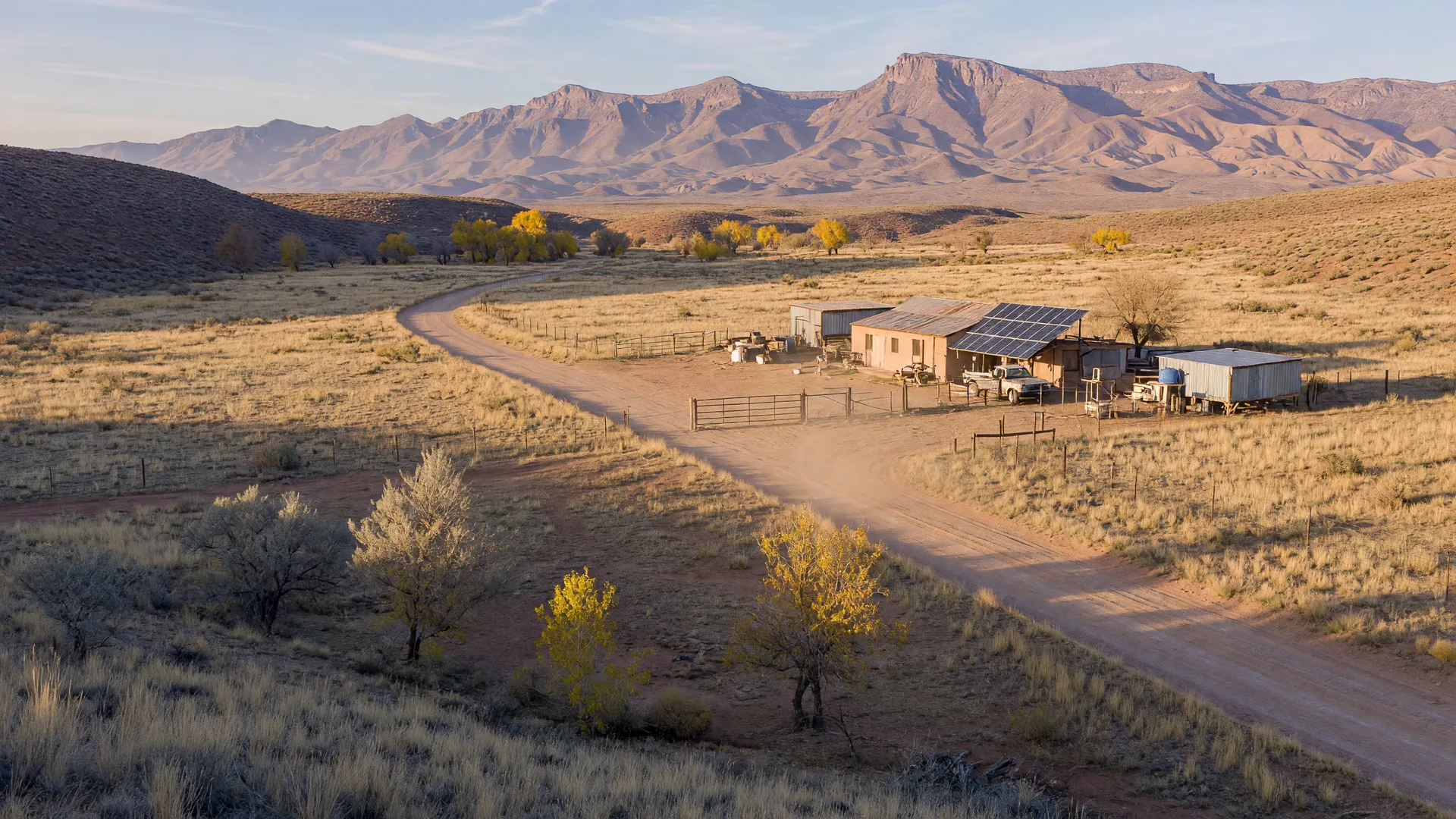
The county's building code draws its first line at 200 square feet. A one-story, detached, non-habitable accessory structure, think a garage, carport, tool shed, storage building, cargo container, or garden structure, is exempt from the building permit when its floor area, measured at the outside of the foundation, does not exceed 200 square feet and it meets the height limits. That is the sweet spot for a small equipment shed, a generator enclosure, or a feed room.
Two things trip people up here. First, exempt from the permit does not mean exempt from the process: even a small shed needs site plan review and zoning approval before you build, and it must meet the setbacks from the property lines, so check the lot before you pour anything. Second, the exemption only covers a plain shell. The moment you add plumbing, electrical, or mechanical systems, the structure is back in the permit stream, because a shop with power and a workbench is no longer an exempt shed. That matters for the buyer who pictures running extension cords across the yard. If you want real power in the building, plan on the full path from the start and price it before you buy the land, not after. My guide to grid power versus solar for rural parcels covers what running power to an outbuilding actually costs.
DETACHED SHOPS AND BARNS: THE PERMIT PATH
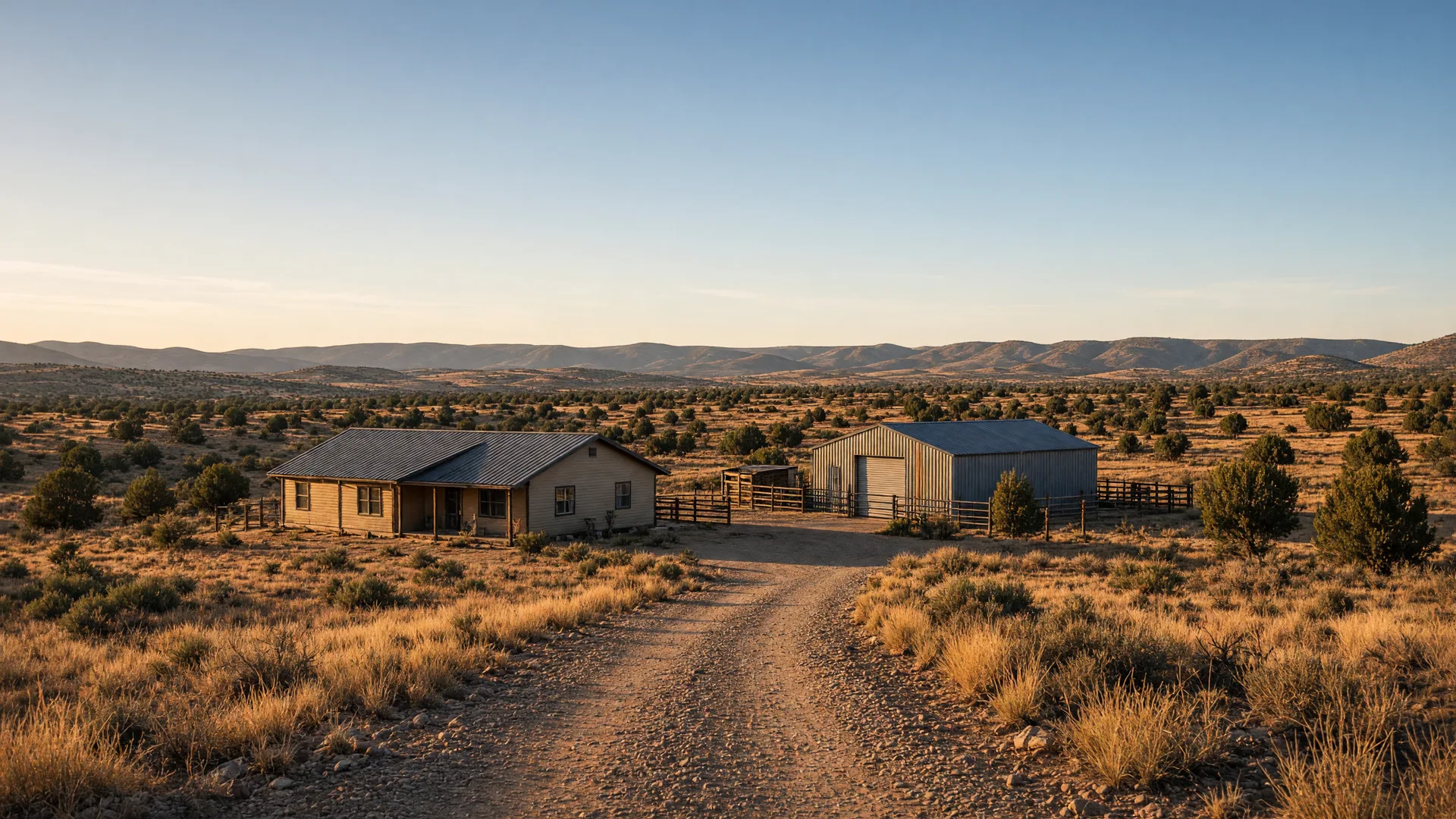
Most of the buyers I work with want more than a shed. The 40x60 shop, the hay barn, the workshop with a loft, the garage big enough for a truck and a tractor, these are the buildings that make a rural property function, and they are absolutely buildable on GR land. But they run 2,400 square feet and up, far beyond the 200-square-foot exemption, so they go through the real process: zoning and use review with the county's zoning inspector, then a building permit through Gila County Community Development and Building Safety. You will also need the site plan to show where the building sits relative to property lines, because the setback table in Section 106 of the zoning ordinance applies to accessory structures just like it does to the house.
The other decision to make deliberately is whether the shop stays non-habitable. The moment a structure has living space, a bedroom, a sleeping loft, a bathroom that gets used as a dwelling, the county classifies it as a dwelling, and it has to meet the guest house or ADU rules instead of the shop rules. I have seen buyers design a beautiful shop with a finished loft, then discover they cannot legally sleep up there the way they planned. If the loft is meant to host people, say so on the drawing board, and design it as the county will actually permit it. For the buyer building from scratch, my guide to how much land you actually need for a homestead or hobby ranch helps you figure out the footprint before you start adding buildings.
"When a buyer tells me they want a shop and a guest house on five acres, I do not just point at the parcel. I pull the zoning, walk the structure rules, and make sure the well and septic can carry a second bathroom and a kitchenette. The land is the easy part. The rules are where most buyers get surprised."
GUEST HOUSES: THE 800-SQUARE-FOOT RULE
If you want a place for the kids when they visit, an aging parent, or a friend staying for a season, Gila County allows a guest house as a secondary dwelling on single-family rural land. The boundary is specific: a guest house is a detached or semi-detached dwelling of not more than 800 square feet of gross floor area with not more than two habitable rooms, it must include sanitary facilities, and it may have an optional kitchenette. In plain language, a comfortable one or two room unit with a bath and a small kitchen corner, but not a full second house and not a rental.
The word that does the real work is occupancy: a guest house is for relatives, servants, or non-paying guests of the people who live in the main dwelling. The minute you plan to rent it out, you have left guest house territory and entered a different set of questions about rental use and commercial activity. Some buyers hear "guest house" and picture a rental income stream, and I have to be straight with them that the ordinance as written is not set up for that. If your plan is a mortgage-helper rental, that is a conversation we need to have before you buy, with the county's rules for the exact parcel in hand.
ACCESSORY DWELLING UNITS: ORDINANCE 2015-04
For buyers who want a genuinely separate unit, Gila County's accessory dwelling unit ordinance (Ordinance No. 2015-04) permits one ADU in all single-family residential districts, including GR. An ADU is a small, self-contained unit with its own entrance, cooking facilities, and bathing facilities on the same lot as a larger single-family home, and it can be attached to the house, detached from it, or created inside it. This is the more flexible tool than the guest house rules, because the unit is a complete home rather than a capped accessory.
Two conditions matter most to buyers, and both are easy to miss. First, the primary dwelling must already be established on the property before the ADU is permitted, so you cannot buy raw land, build only the accessory unit, and call it home. The house comes first. Second, the property owner must reside in either the primary dwelling or the accessory unit, which means an ADU is not an absentee rental play while you live elsewhere. There is also a design limit: no more than one entrance per story may face a street on each facade, which affects how a detached unit is oriented on the lot. My guide to what is legal on unincorporated Gila County land puts the ADU rule in the context of the wider permitting picture, including septic and building permits.
WHY AN ACCESSORY MANUFACTURED HOME IS USUALLY A TRAP
This is the one I flag on nearly every showing that has a second manufactured home sitting on the acreage, because it is the most common misunderstanding in the whole rural market. Under the county's building code, an accessory manufactured home must comply with accessory-building zoning rules, cannot be used as a dwelling, guest house, or habitable space of any kind, cannot be larger than the residence or attached to it, and cannot be connected to water, sewer, or gas. The dream of parking a used mobile home on the back forty as a guest cabin, hooking it up, and calling it done, does not work on unincorporated Gila County land. As an accessory, it is treated as a storage structure, not living space.
Understand what this means when you see a listing with two manufactured homes. The second unit may be perfectly legal as an accessory, but it cannot be counted as a rentable unit or an extra bedroom, and it may not have been placed with a permit at all. Ask the seller how each structure was placed and whether it is permitted, pull the records, and treat any unpermitted dwelling as a negotiation item. The manufactured home market here is deep enough that you should also read my guide to financing manufactured homes in Gila County before you build a plan around one.
WHAT TO CHECK BEFORE YOU BUY: THE FIVE-ITEM LIST
Here is the checklist I run with every buyer who plans structures, and you can take it straight to the county yourself:
- Confirm the zoning of the exact parcel with the county zoning office, from the parcel number, not from the listing. Two adjacent parcels can sit in different districts.
- Ask what structures exist and whether they were permitted. An unpermitted shop or guest house is a liability and a negotiating item, not a value-add.
- Check the well and septic capacity. A guest house or ADU means a second bathroom, a kitchenette, and more daily draw. If the well is marginal or the septic is undersized, your building plans change. My guide to verifying water access and my well drill guide walk through both.
- Verify access that can take a build. The delivery truck, the trusses, the concrete pump, they all need a real road. A driveway that works for a pickup may crush a building project.
- Read the setback table for the district in Section 106 of the zoning ordinance and confirm the minimum lot size, because setbacks decide where a shop or guest house can actually sit on the acreage you are about to buy.
None of this is meant to scare you off. It is the due diligence that separates a smooth rural build from a surprise, and it is exactly the kind of local detail that does not show up in a listing photo. The same diligence applies to the price side: when you are comparing parcels, my guide to what land prices buy by area helps you see where your budget goes before you fall for a specific view.
WHAT THIS MEANS FOR SELLERS
If you are selling, permitted structures are real value and unpermitted ones are a discount. A rural parcel with a legal 40x60 shop, a permitted guest house, or a properly established ADU markets itself to exactly the buyer who wants space and self-sufficiency, and it prices accordingly. A parcel carrying an unpermitted structure, or a second manufactured home that was never legal as a dwelling, triggers the buyer's questions at the worst possible moment, during due diligence, and often kills a deal. Before we list, I tell every seller to pull the permit records for every structure on the parcel, and to be direct about what was never permitted, because a buyer who discovers it later walks away. This is one of the quiet reasons rural properties sit on the market, which I cover in my guide to why rural properties fail to sell.
THE BOTTOM LINE
Most GR zoned rural parcels in Gila County will let you do the full rural program: a non-habitable shed up to 200 square feet without a building permit, a larger shop or barn through the zoning and building permit process, a guest house capped at 800 square feet and two habitable rooms, and one accessory dwelling unit once the main home is established. The exact numbers and setbacks depend on the parcel's specific district, so the county confirmations matter, and accessory manufactured homes cannot be used as dwellings no matter how convenient that sounds. Check the zoning, the permits, the well, the septic, and the access before you offer, and the building plan you have in your head becomes the building plan you actually get.
When we look at a parcel together, we go through this checklist on the ground: zoning, structures, water, septic, access, and what the county will actually permit for the buildings you want. You can see how I present the kind of properties I sell on my current listings page, my About page explains why I work this market from Globe rather than Phoenix, and the contact page is the easiest way to reach me. Call or text me at 480-797-1824, and let's start with what you actually want to build, not a sales pitch.

Written by Neil Blindauer

Realtor, DeLex Realty · A.I. Certified Agent™
With 9 years in real estate, I specialize in off-grid land, rural homesteads, and one-of-a-kind properties across Gila County, serving Globe, Miami, Winkelman and Kearny.
Learn more about Neil